Most terraces don’t empty in October because it’s cold. They empty because it’s windy. A guest can sit happily outside at 10°C on a still, sunny afternoon, but the same 10°C with a breeze cutting across the table sends them inside or home before dessert. This guide is for pubs, hotels and restaurants. It explains why guests give up on outdoor tables and how screens and radiant heat fix it, and it covers the rules that apply once you start enclosing a terrace.
Why do patrons avoid outdoor tables in winter?
Guests leave outdoor tables in winter mainly because of wind, then cold, then darkness. Wind is the first problem to fix because it strips heat from people faster than anything else on a terrace.
Five things usually combine to empty a winter terrace:
- Wind across the tables. A steady draught chills hands, necks and food long before the air temperature becomes the problem.
- Cold from above and around. An open terrace loses any warmth straight into the sky.
- Cold seating. Metal and stone seats feel freezing after dark.
- Early darkness. A terrace with no lighting looks closed by late afternoon in December.
- Showers. One downpour with nowhere to shelter sends a whole section indoors.
Each of these has a fix. The order matters, though: heat on a windy terrace is mostly wasted.
How much colder does wind make a terrace feel?
Wind can make a terrace feel several degrees colder than the thermometer shows. The Met Office explains that “moving air removes heat from the body more quickly than still air”. It gives the example that 10°C on a calm day may feel close to 10°C, while the same temperature in a strong wind can feel several degrees colder.
That effect is strongest on exposed sites, which describes many hospitality terraces: riverside decks, rooftop bars, seafront hotels and pavement cafés on streets that funnel the wind. Guests sitting still for an hour or more feel it far more than someone walking past.
The practical takeaway is that removing the draught is the cheapest comfort gain you can make. Still air holds warmth around a table, and any heat you add then stays where the guests are.
How do glazed windbreak screens keep a terrace comfortable?
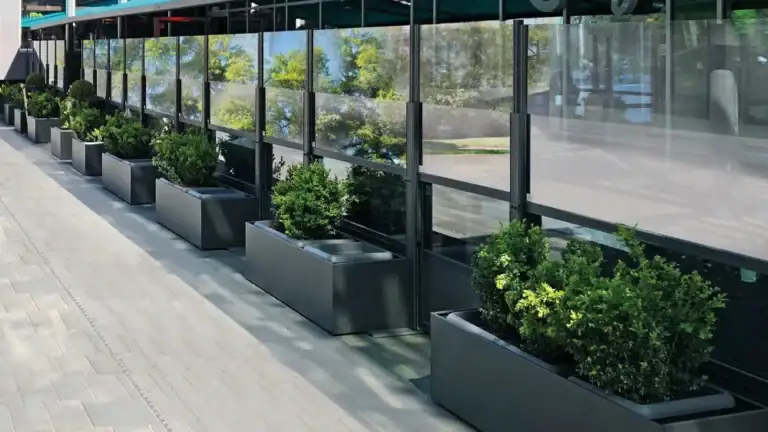
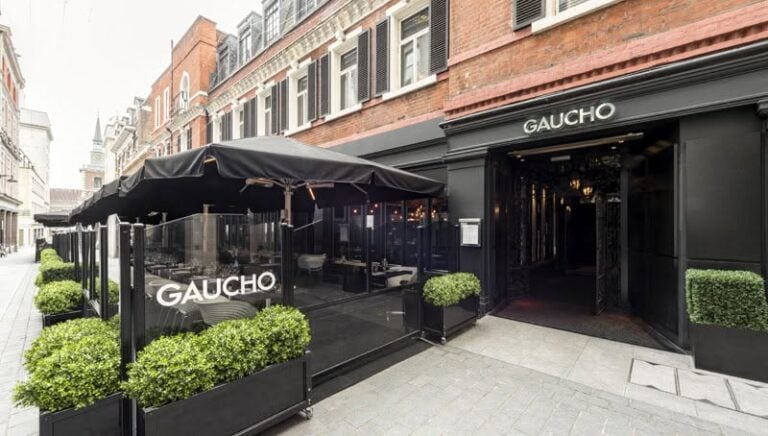
Glazed windbreak screens keep a terrace comfortable by stopping the draught at seated head height while leaving the view and daylight open. Guests feel sheltered without feeling shut in, and passers-by can still see a busy terrace.
Where to put them
- Windward side first. Screen the side the prevailing wind comes from, then any gaps that create a wind tunnel.
- Seated head height. The screen needs to protect people sitting down, not just the table top.
- Glass over solid panels. Glass keeps the view, the light and the kerb appeal that draws walk-in trade.
Which Terrazzo screens suit which terrace
| Terrace situation | Terrazzo option | Why it fits |
|---|---|---|
| Most restaurant and café terraces | Roma Elegance | The most popular Terrazzo system, available free-standing or fixed down |
| Terraces that need shelter on cold days and open views on warm ones | StarUp&Down | A fixed lower pane and a moveable upper pane, adjustable to three heights |
| Venues that want a fully open, barrier-free look | Total Vision or Panorama | Fully glazed, modular all-glass screens |
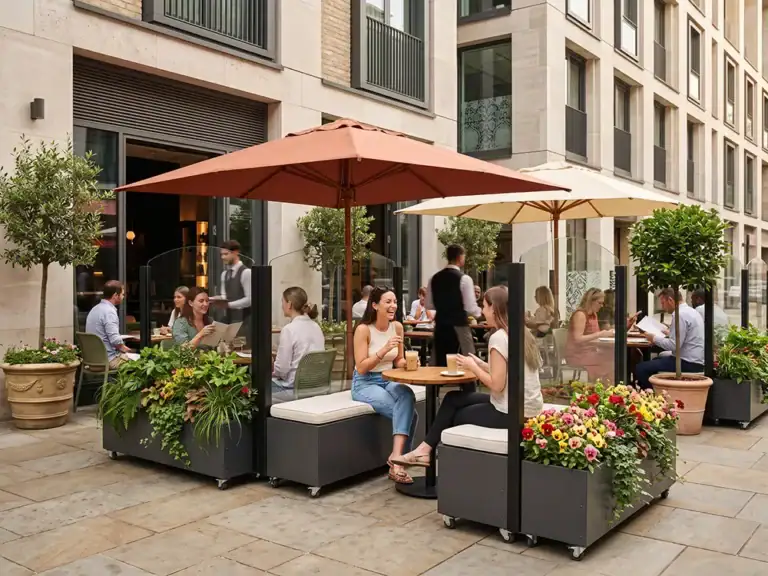
| Pavement licence areas and terraces you reconfigure | Free-standing and mobile windbreaks | Lockable castors mean screens can be repositioned in minutes |
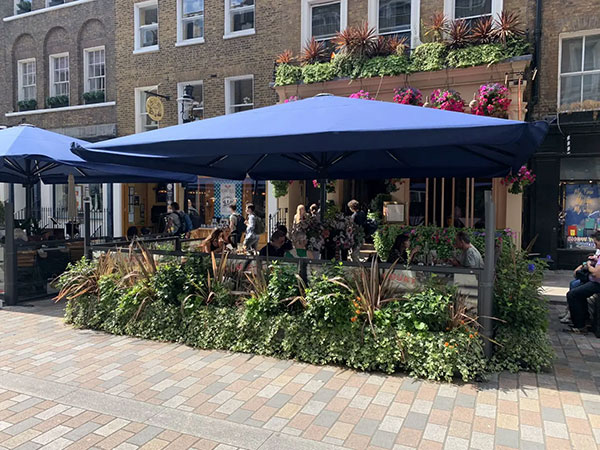
| Terraces that need greenery and seating | Planter and bench windbreaks | Screens with integrated planters, benches, or both |
| Permanent terraces on private land | Fixed down windbreaks | Bolted to the floor, with aluminium frames and tempered safety glass |
Bases come in aluminium, galvanised steel or AISI 316 stainless steel, with stainless recommended for exposed coastal sites. Every Terrazzo screen is designed and manufactured in Italy and comes with a five-year warranty. Screens can also be supplied in custom colours or with your branding.
Which patio heaters work best for hospitality terraces?
Radiant (infrared) heaters work best on hospitality terraces because they warm people and surfaces directly rather than the open air. Air heated on an open terrace drifts away on the first breeze. Radiant warmth reaches the guest the way sunshine does, even when the air around them is cold.
Electric infrared heaters suit commercial terraces for practical reasons too:
- Instant warmth. They need no warm-up time, so staff can switch a zone on when guests sit down.
- No gas cylinders. There are no bottles to change, store or move around the terrace.
- Mounted out of the way. They fit on walls, canopies and parasols, keeping floor space free for covers.
- Zoned control. Heat runs only over the occupied tables.
Terrazzo layouts can include HeatLogik® heating from SunSwitch, Terrazzo’s parent company. HeatLogik® is SunSwitch’s proprietary shortwave infrared technology, and the HeatLogik outdoor heating range is designed for terraces and canopies.
Real example: Guinness Open Gate Brewery, London. The brewery wanted guests warm and sheltered under a five-metre-high, open-sided canopy, where standard patio heaters could not deliver effective heat. Terrazzo and SunSwitch installed 6kW HeatLogik high-level radiant heaters in a custom black finish. They run in three independently controlled zones, alongside Guinness-branded height-adjustable windbreak planters. Read the Guinness case study.
What does a winter-ready terrace look like?
A winter-ready terrace solves wind, cold, darkness and rain in that order, and still looks inviting from the street. Use this checklist to audit yours:
| Problem | Fix | Terrazzo or SunSwitch option |
|---|---|---|
| Wind across the tables | Glazed screens on the windward side | Roma Elegance, StarUp&Down, Total Vision |
| Cold from above and around | Radiant heaters over each seating zone, on timers | HeatLogik outdoor heaters |
| Cold seats | Cushions, blankets and warmed seating areas | Bench windbreaks with cushions |
| Dark by late afternoon | Warm lighting along screens and over tables | Lighting add-ons for screens |
| Bare, uninviting edges | Planters that soften the boundary | Planter windbreaks |
| Street noise | Screens between tables and traffic | Glazed terrace screens |
| Showers | Canopy or large parasols over the heated zone | Pair screens with your existing cover |
[CLIENT INPUT NEEDED: one figure from a Terrazzo customer, such as covers added or extra months of terrace trading after installation.]
What rules apply to screened and heated terraces?
Screening and heating a terrace can bring three sets of rules into play: smoke-free law, pavement licensing and planning. Check all three before you order.
Smoking. In England, the Smoke-free (Premises and Enforcement) Regulations 2006 ban smoking in premises that are “enclosed” or “substantially enclosed”. A space counts as substantially enclosed if it has a ceiling or roof and the openings in its walls add up to less than half the wall area. Screens on an open-topped terrace do not trigger this. Adding a fixed roof or canopy to a screened area can, so plan smoking areas before you enclose them. Wales, Scotland and Northern Ireland have their own smoke-free rules.
Pavement licences. In England, a pavement licence lets you place removable furniture on the highway outside your premises. Councils can charge up to £500 for a new licence and £350 for a renewal, and can grant licences for up to two years. Free-standing or mobile screens are the safer choice here, because fixings into the pavement are usually not allowed. Check your own council’s conditions.
Planning. Removable windbreaks usually do not need planning permission, but fixed structures, listed buildings and conservation areas may. Check with your local authority before you install anything permanent.
How do you plan a winter terrace upgrade?
Planning a winter terrace upgrade takes five steps, and the earlier you start, the more of the season you trade.
- Walk the terrace on a windy day. Note where the wind comes from, which tables guests avoid and where staff feel the cold.
- Measure and photograph it. Record the length of each exposed edge, the surface, and any canopy, walls or overhead fixing points.
- Choose fixed or mobile screens. Use fixed down screens on private ground you control, and free-standing or mobile ones on licensed pavement areas.
- Add heat zones. Plan radiant heaters over the tables you most want to fill, with timers or zone controls.
- Order ahead. Terrazzo screens typically take four to six weeks to arrive, so book before you need them.
Terrazzo’s in-house design team offers a free layout service, which turns steps 2 to 4 into a drawing and a quote.
Removable, free-standing windbreak screens usually do not need planning permission. Fixed structures, listed buildings and conservation areas can be different, so check with your local authority before you install anything permanent.
In England, a pavement licence covers removable furniture on the highway, so free-standing or mobile screens are the usual choice. Your council’s licence conditions decide what is allowed, so check them before you order.
For most commercial terraces, yes. Infrared heaters warm people directly rather than the open air, give heat instantly, need no gas cylinders and can be zoned and timed. Combined with windbreak screens, the warmth stays at the tables.
In England, guests can smoke on a screened terrace as long as it is not enclosed or substantially enclosed. A terrace counts as substantially enclosed if it has a roof and the openings in its walls make up less than half the wall area. Adding a roof to a screened area can make it smoke-free by law.
Terrazzo screens typically take four to six weeks from order. Ordering early in autumn gives you the full winter season on a protected terrace.
Losing revenue to the cold UK weather?
Request a free layout and quote
Send us a photo or plan of your terrace. Our in-house design team will propose a screen, planter and heating layout that protects your most exposed tables, with a quote to match.