Commercial planters are usually bought to make a terrace look good. Used well, they can also make it earn more. Grouping planters, glazed windbreaks and heating into clear zones turns one open seating area into several spaces, each with its own job. This guide explains how to plan those zones, what pavement licence rules allow, and how to choose windbreak planters that work all year.
Contents
- What does zoning a restaurant terrace mean?
- Why do commercial planters make good zone dividers?
- Which zones does a profitable terrace need?
- How does zoning keep guests outside in cooler months?
- How does zoning increase terrace revenue?
- What does a pavement licence allow?
- How do you choose commercial planters for a terrace?
- How do you plan a zoned terrace, step by step?
- FAQs
What does zoning a restaurant terrace mean?
Zoning a restaurant terrace means dividing the outdoor space into areas, each designed for one purpose. A dining zone, a drinks zone and a private-hire zone each get their own shelter, layout and service plan.
An unzoned terrace is one block of tables. Guests choose seats at random, the exposed edges stay empty when the wind picks up, and staff heat and serve the whole area even when only a corner is in use.
A zoned terrace uses physical dividers to separate areas. Commercial planters, windbreak screens and benches are the most common. Each zone can then be sheltered, heated, booked and closed independently.
Why do commercial planters make good zone dividers?
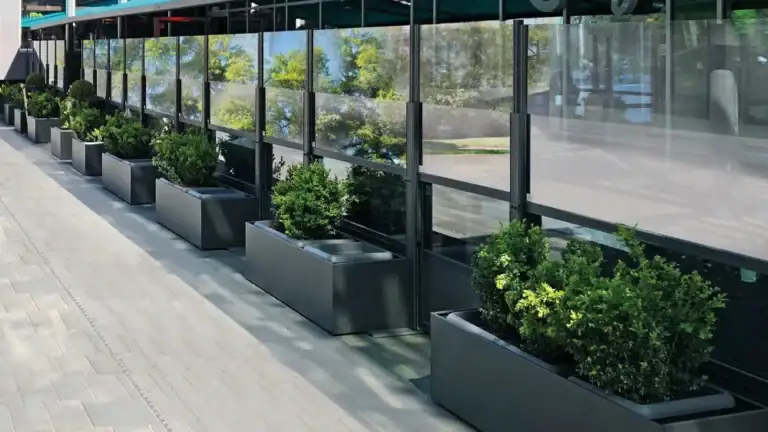
Commercial planters suit zoning because they mark a boundary, add greenery and can be moved when the layout changes. When a planter is combined with a glazed screen, it also becomes a windbreak.
Three features make them well suited to hospitality terraces:
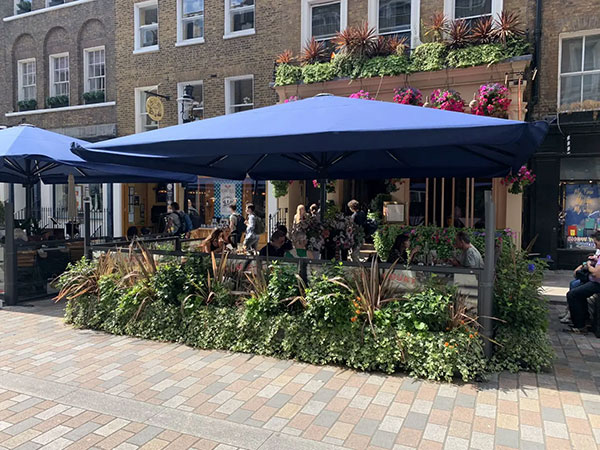
- They define space without walls. A line of planters tells guests and passers-by where the terrace starts and where one area ends.
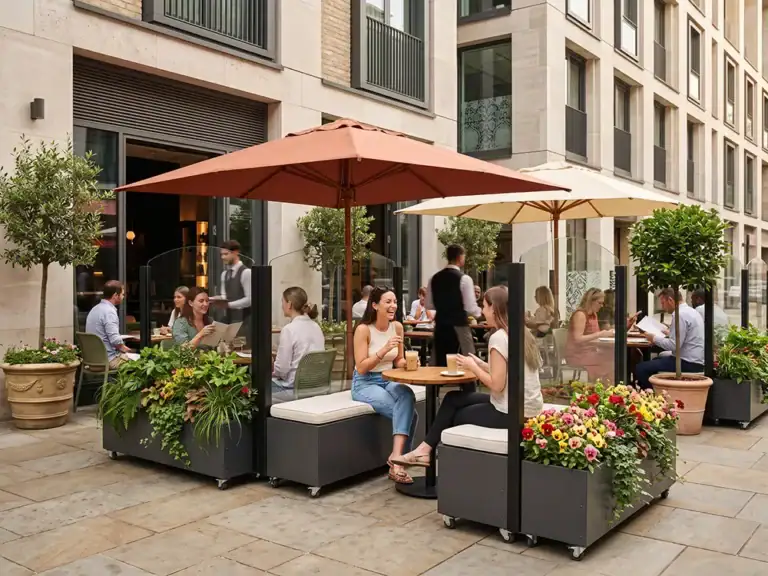
- They can be moved. Mobile planters on castor wheels can be rolled into a new layout for an event, or brought in at night.
- They can shelter guests. Windbreak planters combine a planter box with a safety-glass screen above it, which blocks wind while keeping the view open.
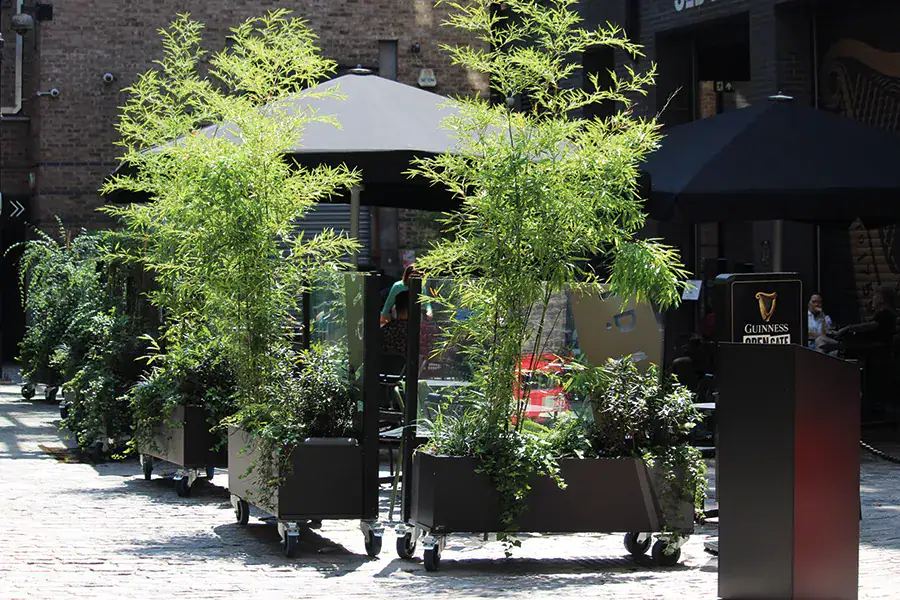
Terrazzo’s commercial planters can also carry branding. At the Guinness Open Gate Brewery in London, height-adjustable windbreak planters were supplied with a bespoke Guinness branding scheme developed with the brewery’s marketing team.

Which zones does a restaurant terrace need to be more profitable?
Most profitable terraces have four to six zones, each with a commercial job. Not every venue needs all of them, but each one should earn its space.
| Zone | Commercial job | Divider and shelter | Where it goes |
|---|---|---|---|
| Arrival and welcome | Draws in passing trade and shows off the brand | Low branded planters with seasonal planting | Street edge, next to the entrance |
| Sheltered dining | Highest-value covers, bookable all year | Windbreak planters or screens on the prevailing-wind side, plus overhead heating | The most protected part of the terrace |
| Drinks and casual | Walk-in trade and higher table turnover | Planter-benches that double as seating | Between arrival and dining |
| Private hire or booths | Pre-sold group bookings and events | Taller windbreak planters forming a semi-enclosed area | A corner or end section that can be closed off |
| Smoking area | Keeps smoke away from diners | Planters with screens as a buffer | Downwind of dining, away from doors |
| Service route | Faster service and a clear path | Planter lines that keep the route open | Between the kitchen or bar and each zone |
How does zoning keep guests outside in cooler months?
Zoning keeps guests outside for longer because shelter and heat can be targeted at the tables people actually use. Wind is usually what drives guests indoors before cold does.
Wind comfort can be measured. The City of London Corporation’s wind microclimate guidelines, based on the Lawson comfort criteria, class a space as suitable for frequent outdoor sitting, “e.g. restaurant, café”, only where wind speeds stay at or below 2.5 m/s for 95% of the time. Many open terraces exceed that, especially on corners and between buildings.
Glazed windbreak planters on the exposed side of a dining zone reduce the wind reaching seated guests. Adding heat zone by zone then lets you warm only the occupied areas. At the Guinness Open Gate Brewery, SunSwitch HeatLogik® radiant heaters were installed with three independently controlled heating zones, so staff can heat only the areas in use.
How does zoning increase terrace revenue?
Zoning increases terrace revenue by creating more usable covers, on more days, at a higher value per table. It works through five levers:
- More trading days. Sheltered zones stay comfortable on days when an open terrace would be empty.
- Bookable outdoor tables. Guests will reserve outdoor tables they trust to be comfortable, which turns walk-in seating into forecastable covers.
- Private-hire income. A semi-enclosed zone can be sold to groups and corporate events without closing the rest of the terrace.
- Lower running costs. Quiet zones can be closed, unheated and left unstaffed while the busy zone keeps trading.
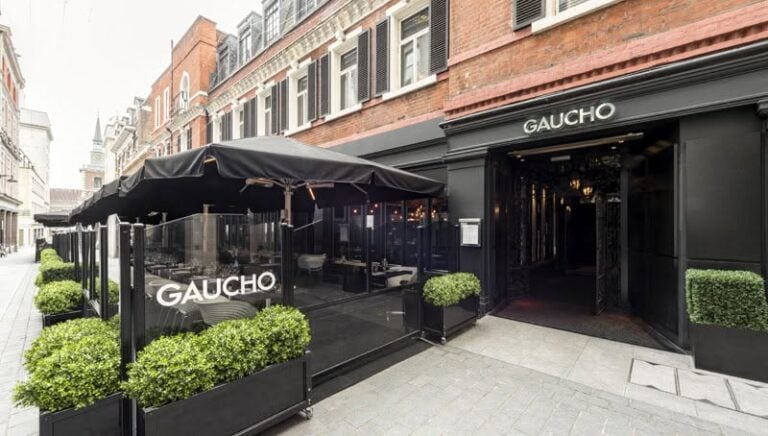
- Brand presence. Branded planters at the street edge advertise the venue to passing trade every day of the year.
A simple way to estimate the gain. Multiply the covers in your new sheltered zone by sittings per day, average spend per cover and the extra days you expect to trade. As an illustration only: 24 covers × 1.5 sittings × £30 × 40 extra days comes to £43,200 in extra sales. Replace each figure with your own till data and local weather.
What does a pavement licence allow?
In England, a pavement licence allows removable furniture used for outdoor food and drink, including seating, umbrellas, barriers and heaters. According to the GOV.UK pavement licences guidance:
- Furniture must be removable. It must not be a fixed structure, and generally must be able to be moved and stored at night.
- Barriers are allowed. Councils may require a barrier between furniture and the rest of the footway, with colour contrast and a tap rail for people using long canes.
- A clear route must remain. A 2,000mm footway width is the normal minimum, and 1,500mm is the minimum acceptable distance between two obstacles.
- Fees are capped. Fees are capped at £500 for a first application and £350 for a renewal, and licences can last up to two years.
Planters are not named in the guidance, so check with your council how it treats them. Mobile and free-standing windbreak planters are designed to be moved, which helps. Terraces on private land, and venues in Scotland, Wales and Northern Ireland, follow different rules.
How do you choose commercial planters for a terrace?
Choose commercial planters by how exposed the terrace is, how often the layout changes and whether you need wind protection. The Terrazzo range covers each of these needs:
| Model | Configurations | Best for |
|---|---|---|
| Nizza Planter | Free-standing, mobile or fixed down; fixed height | Year-round shelter on breezy terraces |
| Napoli Planter | Free-standing, mobile or fixed down; fixed height | Terraces that want a screen in winter and a plain planter in summer, as the glass upper section lifts off |
| Roma Elegance Planter, Bench, or Bench and Planter | Mobile; fixed height | Planter-benches that add seats and divide zones at the same time |
| StarUp&Down Planter | Free-standing, mobile or fixed down; height-adjustable | Venues that want to raise the glass on windy days and lower it on calm ones |
Explore all our Terrazzo Screens commercial planters and benches. All models are made in Italy and come with a five-year warranty and a four to six week lead time.
Check these points before ordering:
- Base material. AISI 316 stainless steel bases are available on the StarUp&Down range for exposed or seaside locations.
- Mobility. Castor wheels suit terraces that change layout or must be cleared at night.
- Ground conditions. The range is designed for uneven surfaces, which matters on older pavements and cobbles.
- Planting. Evergreen planting keeps zones looking full in winter, when the terrace most needs to look inviting.
How do you plan a zoned terrace, step by step?
Plan a zoned terrace by starting from the wind and the walkway, then fitting the zones around them.
- Measure the space. Mark the licensed boundary, doors, kerbs and the clear route the council requires.
- Map the wind. Note where guests feel the wind most and which direction it usually comes from.
- Place the sheltered dining zone first. Put it in the most protected area, with windbreak planters on the exposed side.
- Add the other zones. Fit drinks, arrival, smoking and private-hire areas around the dining zone, keeping the service route clear.
- Add heating by zone. Give each zone its own heating control so quiet areas can be switched off.
- Review each season. Use booking and sales data to see which zones earn most, then move mobile planters to suit.
FAQs
Commercial planters are heavy-duty planters built for business use, such as restaurant terraces, hotel entrances and pub gardens. Hospitality versions often include benches, branding panels or glass windbreak screens, and many sit on wheels so the layout can be changed.
Yes. Windbreak planters combine a planter box with a safety-glass screen above it, which shelters seated guests from wind while keeping the view open. Height-adjustable models let staff raise the glass on windy days.
In England, you need a pavement licence to place removable furniture for food and drink service on the public highway. GOV.UK’s guidance names barriers but not planters, so ask your council how it treats planters on your licence. Terraces on private land are not covered by pavement licences.
Yes, if you choose mobile or free-standing models. Mobile windbreak planters sit on castor wheels so they can be rolled into a new layout or stored at night, which helps meet the requirement for pavement furniture to be removable.
Yes. Terrazzo windbreak planters can carry branding, such as a logo or a bespoke colour scheme. Guinness Open Gate Brewery in London uses Guinness-branded windbreak planters across its terrace.
Planning next season’s terrace?
Request a free layout and quote
Send us a photo or plan of your terrace and tell us how it is licensed. Our in-house design team will propose a zoned layout of windbreak planters, benches and screens that shelters your best tables, with a quote to match.