Café barriers and terrace screens can look like two versions of the same product, but they do different jobs. A barrier tells passers-by where your terrace starts. A screen keeps the people sitting on it comfortable. Choosing the wrong one usually shows up in October, when the tables are set out but nobody wants to sit at them. This guide compares the two on wind protection, branding, pavement licence rules and cost, so you can decide which your venue needs, or whether you need both.
What is the difference between café barriers and terrace screens?
The difference is purpose: café barriers mark out an outdoor seating area, while terrace screens shelter the people sitting in it.
- Café barriers are low, lightweight panels of canvas, PVC or mesh, stretched between posts on weighted bases or ground sockets. They are usually around waist height and are often printed with the venue’s name or a drinks brand.
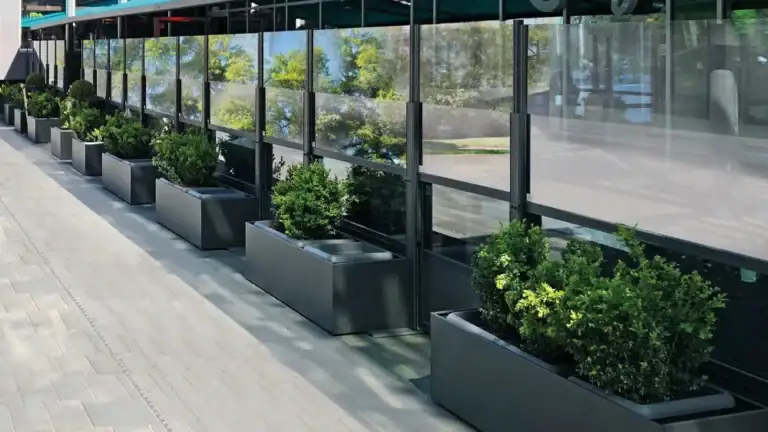
- Freestanding terrace screens are taller panels, usually glazed, on heavy weighted bases or lockable castors. They block wind at the height of a seated guest while keeping the view, daylight and street presence.
Both can be moved, so both suit terraces that change through the day or need clearing at night. The real choice is whether you mainly need to define the space or protect it.
Do café barriers protect guests from wind?
Café barriers give seated guests little protection from wind, because most stop below the height of a seated person’s head and shoulders. Wind passes over the top and straight across the table.
That matters more than the temperature. The Met Office explains that “moving air removes heat from the body more quickly than still air”, and that the same 10°C can feel several degrees colder in a strong wind. Guests sitting still for an hour feel that chill long before they notice the thermometer.
Fabric barriers also catch the wind like a sail, so they need heavy bases or ground fixings to stay upright on exposed sites. A café barrier can manage a light breeze. It is not a windbreak.
What are freestanding terrace screens?
Freestanding terrace screens are glazed windbreak panels that stand on their own weighted bases or wheels, with no fixings into the ground. They give the wind protection of a fixed screen while staying as movable as a café barrier.
Terrazzo’s freestanding and mobile range includes:
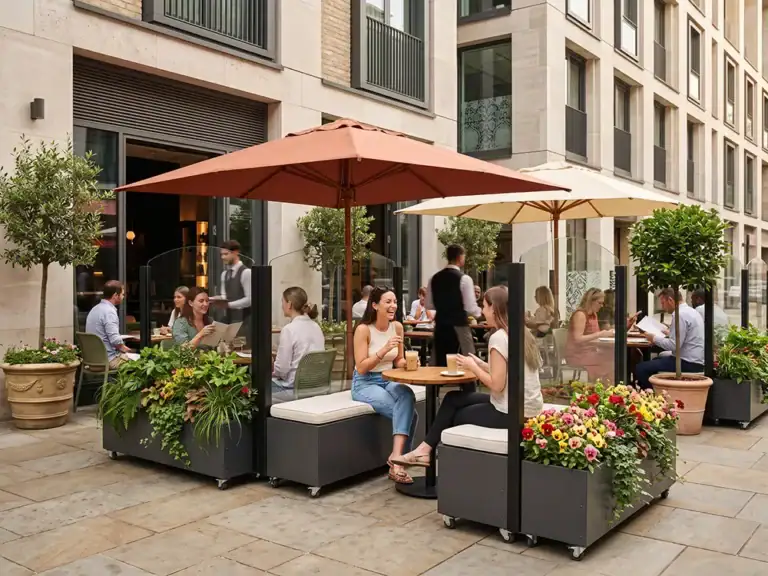
- Roma Elegance: the most popular Terrazzo terrace screen, also available with an integrated planter, bench, or both.
- StarUp&Down: a fixed lower pane and a moveable upper pane, adjustable to three heights.
- Total Vision: fully glazed modules that close off the terrace while keeping it open and transparent.
- Nizza planter: a windbreak with a built-in planter for a softer, greener edge.
Mobile versions run on lockable castors, so they can be repositioned in minutes. They are built for constant outdoor use and can be left outside. Bases come in aluminium, galvanised steel or AISI 316 stainless steel for coastal sites. Every screen is designed and manufactured in Italy, comes with a five-year warranty, and can be supplied in custom colours or with your branding.
Café barriers vs freestanding screens: how do they compare?
Café barriers win on cost and simplicity. Freestanding screens win on guest comfort, durability and longer trading seasons.
| Café barriers | Freestanding terrace screens | |
|---|---|---|
| Main job | Mark out the seating area | Shelter seated guests from wind |
| Typical height | Around waist height | Tall enough to protect seated guests; some models adjust |
| Wind protection for seated guests | Low | High |
| View and daylight | Blocked by printed panels | Kept open by glass |
| Branding | Full-colour printed panels | Custom colours, branding, planters |
| Movable | Yes, lightweight | Yes, on weighted bases or lockable castors |
| Daily set-up | Usually put out and taken in each day | Can stay out in all weathers |
| Upfront cost | Lower | Higher |
| Best for | Sheltered pavements, short summer trading, brand visibility | Exposed terraces, all-year trading, premium venues |
Which can you use under a pavement licence?
Both café barriers and freestanding screens can usually be used under a pavement licence in England, because both are removable. The GOV.UK pavement licence guidance lists “umbrellas, barriers, heaters and other articles” as furniture a licence can cover. It requires that furniture to be removable, not a permanent fixed structure.
The guidance also sets expectations that affect your choice:
- Clear footway. A width of 2,000mm is normally the minimum clear footway to leave for pedestrians, with 1,500mm regarded as the minimum acceptable gap where space is tight.
- Accessible barriers. Councils may want barriers that help visually impaired people navigate, “such as colour contrast and a tap rail for long cane users”.
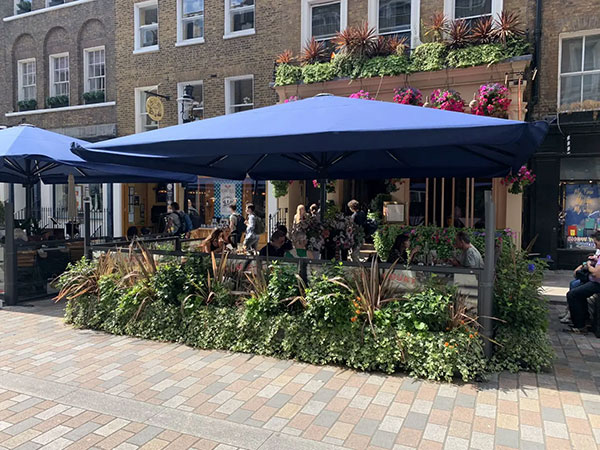
- Rigid demarcation. The guidance suggests “rigid, removable objects”, such as wooden tubs of flowers, can mark the licensed area. Planter windbreaks fit this well.
- No advertising boards as barriers. A-boards are not furniture under a licence and should not be used to mark the area.
Each council sets its own conditions, so check yours before you order. Ground sockets for café barriers, or fixings for screens, usually need separate permission on the public highway.
Which looks better for a premium venue?
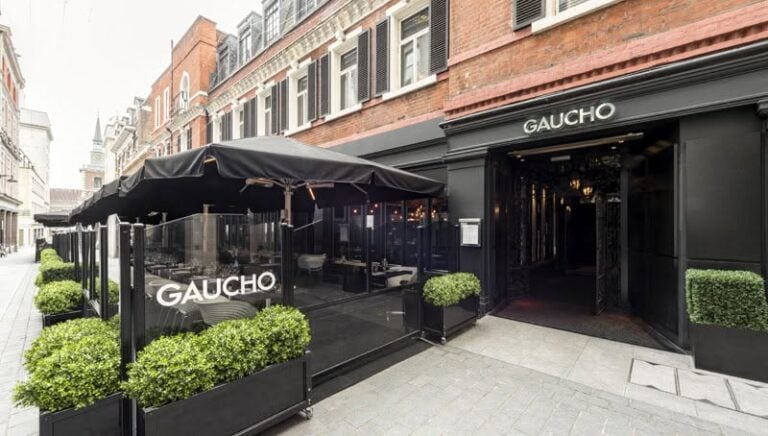
Freestanding glazed screens usually suit a premium venue better, because they keep the frontage, the view and the activity on the terrace visible from the street. A full terrace behind glass looks busy and inviting, and that draws in passing trade.
Printed café barriers still have a place. They are a strong, low-cost way to show a brand on a busy high street, and drinks suppliers often fund them. For hotels, restaurants and bars selling an experience, though, glass, planters and a clean, consistent line usually do more for the brand than a printed banner.
Can you use café barriers and screens together?
Yes. Many venues use both, putting screens where the wind comes from and barriers or planters where it doesn’t.
A typical mixed layout:
- Windward side: freestanding glazed screens, so the tables most exposed to the wind are protected.
- Sheltered sides: café barriers or planter windbreaks to mark the licensed area and carry branding.
- Corners and entrances: planters to soften the edge and guide guests in.
This keeps cost down while still protecting the tables that would otherwise sit empty. Terrazzo’s in-house design team can plan a mixed layout as part of a free quote.
Barriers or screens?
Request a free layout and quote
Send us a photo or plan of your terrace and tell us how it is licensed. Our in-house design team will propose a freestanding screen and planter layout that protects your most exposed tables, with a quote to match.